Tuesday, May 28, 2013

Period Drama Challenge: April Tag Questions


1)  What period dramas have you watched in April?

I watched the 2004 version of Le Silence de la Mer (The Silence of the Sea), a French WWII film based on the novel by Jean Bruller.  I also watched some of Lark Rise to Candleford, which I've been enjoying a lot.


2)  Have you ever watched a period drama where the characters time traveled between eras (i.e. Somewhere In Time, Lost In Austen, From Time To Time)?

I have seen both Somewhere in Time and Lost in Austen.  I liked Somewhere in Time quite a lot, while my feelings towards Lost in Austen were more mixed, although a lot of moments did make me laugh.  One of these days I'm going to review Somewhere in Time and Lost in Austen, so until then, I won't go into much detail.  Let's just say I loved Somewhere in Time, and that my relationship with Lost in Austen is a more complex one.  I'll just leave it at that for now.

3)  What historical era is your favorite and why?

The Edwardian era is very close to my heart, for many personal reasons, being an avid fan of the Canadian author, L. M. Montgomery.  L. M. Montgomery's early novels took place during the Edwardian time period.  In her later books, written in the 1920's and '30's, her writing style remained the same.  In fact, her writing was out of fashion in 20th century academic circles, as it exhibited no modernist tendencies.  L. M. Montgomery's work was no less popular among her readership, for its Romantic or Victorian influences, however, and continues to touch a chord with a large and loyal fan base.  I count myself among them, and hope to see Prince Edward Island in person some day.
Jane Seymour as Marguerite in The Scarlet Pimpernel (1982).

I like both the Tudor era and the Elizabethan era, as well.  I find those chapters in history to be very interesting and intriguing.  The Regency era was lovely in many ways.  I love the style of Regency gowns.  I also like the era of the French Revolution, because of the fashion and style of the women at that time period, with their fashionable choker necklaces and brilliant hats.

Lana Parrilla as Regina, the Evil Queen, in one of my favorite
tv shows, Once Upon a Time.  Her outfit in this scene has always
reminded me of the French Revolution fashion trends, especially the hat.

I also love the Victorian era, but I have a love-hate relationship with that time.  Despite the aspects of the Victorian age that I love, such as their style of writing and literature (Charles Dickens, Elizabeth Gaskell, the Brontë sisters, etc.), I dislike the class warfare and social injustice that worsened during the period of the Industrial Revolution, and the sexism in regards to how the women were looked upon and treated in Victorian society.

4)  How many William Shakespeare film adaptations have you seen?

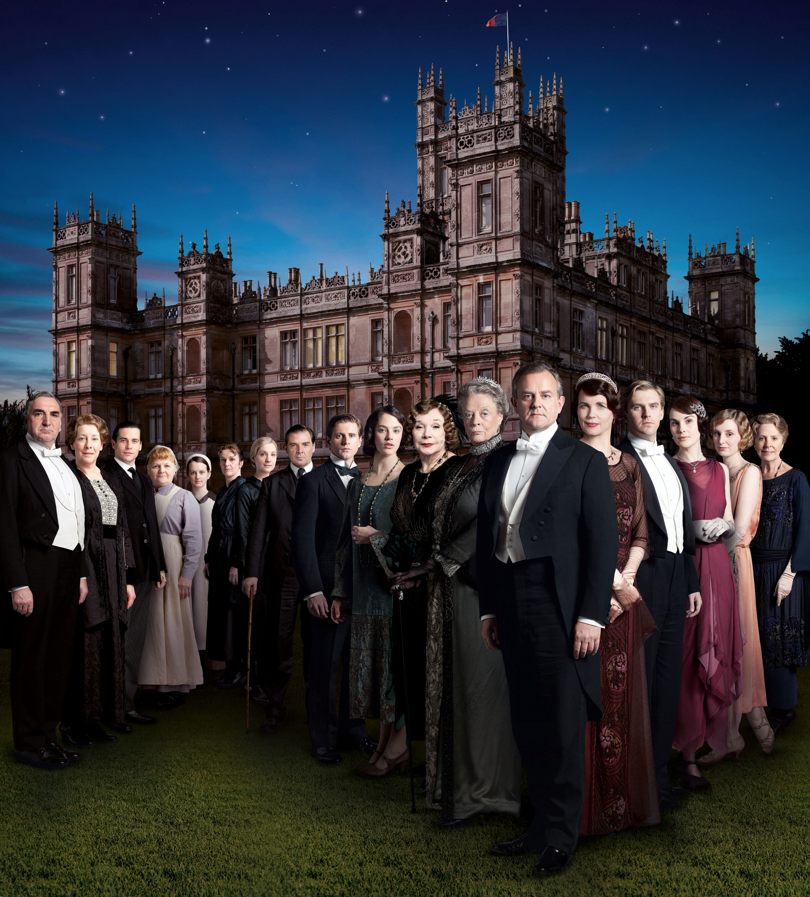
I am a fan of his work ("A Mid Summer Night's Dream" was a childhood favorite of mine, and I love "Hamlet" and "Much Ado about Nothing"; "Romeo and Juliet" was a book I was assigned to read in school), but I have only seen one movie based on one of his works - Romeo And Juliet (1968).  I thought the characters were cast perfectly and the superb acting of the actors and actresses brought the characters to life vividly.  I thought it was a decent adaptation.  Speaking of Romeo and Juliet, there is a new film adaptation coming out some time this year.  The screenplay is written by Julian Fellowes, the creator of Downton Abbey, my favorite tv show.  Here's the trailer:


5)  If a new biographical film based on the life of your favorite classic author were made would you rejoice or be the first to sign a "do not make this film" petition?

I would rejoice, but if I had any reason to believe the film would not do the author justice, it would be more likely that I would sign the "do not make this film" petition.

Sunday, April 7, 2013

Period Drama Challenge: February and March Tag Questions


For all of February and March, this blog has been rather empty and lonely - but at long last, I've returned.  I've finished my first review for the Period Drama Challenge, on Le Silence de la Mer, a French WWII film.  I would have posted my first review a long time ago, but I never had enough time to finish it until recently.  I have also never answered the tag questions for February and March, but I am about to do that now.  Below are my answers to the tag questions for both February and March.

February Tag Questions:

1)  What period dramas have you watched in February?


I saw a French period film, called La Fille du Puisatier, or The Well Digger's Daughter (2011).  La Fille du Puisatier is set in the French countryside pre-World War II.  It's rich with emotion, perfectly cast, and the scenery of the French countryside is absolutely beautiful.  I think it's a well done film and I definitely recommend it.

2)  How many Charles Dickens adaptations have you seen?

In order from the first Charles Dickens adaptation I ever saw to what I most recently saw:

1)  Charles Dickens Classics:  Nicholas Nickleby (the animated version from 1990 - I still have the VHS of this film.  I watched it many times when I was little).
2)  Charles Dickens Classics:  Great Expectations (the animated version from the early '90's - I also have the VHS of this from when I was little).
3)  Nicholas Nickleby (2002)
4)  Bleak House (2005)
5)  Dombey and Son (1983)
6)  Martin Chuzzlewit (1994)

I may have seen others, but the ones listed above are all I can remember at present.

3)  Do you prefer heroes that are spotless wealthy gentlemen or gritty hardworking men?

I wouldn't choose either above the other, because it all depends on who the man is.  So I suppose my answer to this question is both.  There are great heroes that are spotless wealthy gentlemen like Mr. Darcy from Pride and Prejudice, Mr. Knightley from Emma, and so on, while there are equally great heroes that are hardworking, like Mr. Thornton from North and South by Elizabeth Gaskell.

Mr. Thornton presides over his cotton mill in North and South (2004).
There are good and bad spotless wealthy gentlemen, and there are good and bad gritty hardworking men, so as I said, it depends on who is wearing the spotless wealthy clothes or the gritty work(ing) clothes.

4. Do you tend to prefer heroines that are sweet and gentle or adventurous and spunky?

I love both kinds of heroines; they each have their own virtues.  But I think my answer would be adventurous and spunky, as they tend to leave a more memorable impression, such as Elizabeth Bennet.  The one thing I can't stand, however, is when a heroine seems contrived to be spunky.  With Elizabeth Bennet, it doesn't feel forced (and therefore annoying) at all; it's completely natural.  I do tend to sympathise with heroines that are more shy, though, since I am sometimes shy as well.  I find them quite sympathetic.

5. Do you enjoy listening to period drama soundtracks? Do you own any?

No, I don't own any soundtracks.  It never occurred to me before to own one.  Now that I think of it, I wish I did!  Period drama soundtracks are so beautiful and of key importance to the film they are from.

March Tag Questions:

1)  What period dramas have you watched in March?

I have seen a few period films, but mostly I have been watching a lot of Film Noir, such as Out of the Past, The Big Heat, and Laura, all of which are well known in the Film Noir genre.  One of the period films I watched was That Hamilton Woman, starring Vivien Leigh and Laurence Olivier.  That Hamilton Woman is a 1941 film that takes place in the late 18th century/early 19th century (Napoleonic Era).  

2)  How many adaptations of Jane Eyre have you seen?  Do you have a favorite?

I have seen clips of older versions and the 2011 version, but the only adaptation of Jane Eyre I have watched from beginning to end is the 2006 version.  From what I have observed, the 2006 version seems to be the best, but I will have to see other versions to be sure.

3)  Do you prefer period drama villains who are cleverly cunning or downright diabolical?

I prefer villains who are cleverly cunning.  They are more complex and interesting to observe.  Downright diabolical period drama villains would be cool too, but as long as they're also clever.  Clever villains are the most interesting, like Mr. Tulkinghorn from Charles Dickens' Bleak House.

4)  How often does watching a period drama make you want to read the book it's based on?

Many times.  Period films tend to have that effect, I've noticed.  :) North and South (2004) by the BBC is an example of a period film that makes me want to read the book.  The more times I watched North and South, the more I wanted to read the book.  I enjoyed it immensely, and it introduced me to Elizabeth Gaskell's wonderful writing.  North and South by Elizabeth Gaskell is now one of my most favorite novels of all time.  Most of the time the only reason I don't want to read the book after viewing a period film is because I've already read it.

5)  What older period drama would you like to see a remake of?

I can't really think of any period dramas I'd like to see a remake of, but I do know what adaptations I'd like to see made.  I wish more film adaptations of L. M. Montgomery's novels were made, such as the Pat of Silver Bush series.  The mere fact that there aren't enough film adaptations of L. M. Montgomery's work makes me want to become a film director and make them myself!


To the left is the dust cover illustration, by Edna Cooke, of the 1933 first edition of Pat of Silver Bush, by Lucy Maud Montgomery.

Period Drama Challenge Review #1: Le Silence de la Mer

The film genre, Film Noir, has many aspects about it that draw people to it, such as the twists and turns in the plotlines, the snappy dialogue, and the dark tones and urban settings.  But what has always drawn me to Film Noir the most, has been the 1940's fashions and hair styles, and the entire atmosphere of the '40's altogether.  I am of course drawn to the great characters, storylines, and witty dialogue as well, but being a fan of style in the 1940's has played a prominent role in making me a fan of Film Noir.

The movie I am reviewing is not Film Noir.  It is set in the '40's though, so it's nostalgic for me in the same way that Film Noir is.  It's also a French movie, which ties in for me with Film Noir, because it was the French film critics who came up with the term, while viewing American movies in France.  Of course the heroine of this movie is not at all a femme fatale; nevertheless, the wartime tension in the movie I am about to review is tantamount to the uneasy atmosphere typical of Film Noir.  As well, the German character in the movie, with his love of culture, reminds me of the German directors who came to Hollywood and brought their German Expressionist sensibilities to Film Noir.  The color and wide expanse of countryside in the film is a contrast to the usual black and white cityscapes of Film Noir, but all in all it is a movie which conjures up the same time period.


Naturally, a more recent film that takes place in the '40's will take the viewer back in time, but not quite as efficiently as a movie that was actually made during the '40's.  A film that takes place in the '40's will, without a doubt, interest me, though, and the 2004 remake of the 1949 film Le Silence de la Mer (The Silence of the Sea) is no exception.  Le Silence de la Mer (1949) is a famous film by Jean-Pierre Melville, based on the 1942 book by Jean Bruller, who published his work under the name Vercors, when he joined the French Resistance, during the Nazi occupation of northern France in WWII.  Le Silence de la Mer became heavily symbolic of the French Resistance after it was published.  The 1949 film based on Bruller's book was actually filmed in the author's home outside Paris.  Melville's film was influenced by Film Noir, as indeed this wonderful French film director was famously influenced by quite a few elements of American society.

Jeanne Larosière rests during a walk home.
However, I am reviewing the 2004 TV adaptation, not the original 1949 film.  In comparison to the original film, which was termed "anti-cinematographic" because it emphasized a narrative or literary quality of storytelling, rather than a visual aspect, the cinematography of the 2004 adaptation thrives amid the vibrant French countryside.
This still expresses the mood of the overall film perfectly.  One could interpret it as representing how people turn their backs to each other in wartime, cutting themselves off emotionally from other people.
Julie Delarme (left) as Jeanne Larosière in Le Silence de la Mer (2004).
Le Silence de la Mer takes place in a town in the West of France and begins in November, 1941.  It tells the story of a young woman named Jeanne Larosière, who lives with her grandfather, André Larosière (originally Jeanne was the niece of her uncle, but the 2004 TV adaptation changed the relationship to granddaughter and grandfather).  It isn't long before the viewer is informed that Jeanne is a piano teacher; in fact the first scene shows Jeanne giving a piano lesson.

The main premise of Le Silence de la Mer (2004) is about a German officer who is billeted in the country home of Jeanne and her grandfather in Nazi-occupied France.  The German officer (a Wehrmacht captain), whose name is Werner von Ebrennac (played by Thomas Jouannet), is very civil towards Jeanne and her grandfather, André (played by Michel Galabru).  Even though Jeanne and André refuse to speak to him, treating him as their enemy, disdaining him with their silence, and wishing to avoid any hint of collaboration, Werner remains gracious and polite, greeting them and wishing them good night when he returns to their home each evening.  He speaks to them as equals and relates to them in terms of their similar class and common cultural heritage.  He is an avid admirer of French culture and is knowledgeable about all the great French writers.  He notices that Jeanne plays the music of the great German composers, as well.  He is culturally invested and is also of the opinion that France and Germany would benefit from a union of their two countries.  His philosophy is that common humanity supersedes nationalism.

From one perspective, Werner may relate to his hosts because they come from the same class.  Much as Karl Marx pointed out in his book, The Paris Commune, the ruling classes of Germany and France have more in common than their nationalistic conflicts would suggest.  However, I think this is too cynical an interpretation for this film.  Werner is an individual, and he is not that superficial.  He is a genteel and cultured person with sensibilities toward life as a whole, and to other human beings.  His courtesy extends to everyone (including his driver, as well as the young boy named Pierre, who Werner aids when he falls and hurts himself), regardless of class.  I interpret Werner as being basically against war and someone who doesn't fit into the culture of war and the brutality around him, an aspect of his character that Jeanne comes to realize when she tries to protect him from the resistance, which has targeted the German officers for assassination.


Jeanne plays the piano in a desperate attempt to
prevent Werner from being harmed.
The scene in which Jeanne tries to prevent Werner from being hurt brings to light one of the major themes in this story:  communication.  Because Jeanne cannot communicate to Werner through speech, she instead plays on her piano, because music is "a universal language".  Music is an understanding between people, a way for us to express our emotions.  Music can overcome language barriers, and bond people even when they have differences, because the connection humanity feels towards music is a similarity stronger than our differences.  Every time I watch this scene I am fascinated by how profound it is.  Jeanne feels trapped, because she must choose between her loyalty to her country and her loyalty to someone she has come to see as a human being first and foremost (a person she may even have fallen in love with), not merely an enemy of her country.  It comes down to the question:  which matters most in the grand scheme of things?  Should she remain loyal to her country or loyal to all of humanity?  Jeanne is also faced with a moral dilemma.  Wouldn't the right thing to do be to save the person's life, no matter what their nationality is, even in this situation, in the midst of WWII?

The warm, life affirming attitude of the 2004 adaptation is quite different than the supposed existential outlook of Melville's oeuvre (I wonder if anyone so flamboyantly alive as Melville was, could ever really have a problem with the Universe;  I suspect the great director merely followed what he regarded as an important tragic heroic archetype).  *Spoiler alert (I'm about to discuss the ending of the film)*  Despite the geraniums in the window, the ending of the 2004 version is more sombre and realistic than earlier in the movie, although the basic tone of the movie doesn't change.  It remains bitter sweet throughout.  Werner's character hasn't changed, but he no longer has the same illusions about the war.  Still, the ending of the 2004 is no where near as stark as Melville's endings inevitably are, and the characters are allowed to live on.  *End of spoiler*


Melville would have been uniquely placed to appreciate the nuances and contradictions of war between France and Germany, as his real name was Jean-Pierre Grumbach, his family German Jews from Alsace.   His experience in the French Resistance would also have made adapting this particular book a poignant act.  The 2004 remake of Le Silence de la Mer retains the poignancy of the original story, and also its literary complexity.  Everything about this film is beautiful and bitter sweet, from Jeanne and Werner's first encounter to their last - the music, the acting, the story, and the cinematography are all magnificently done and presented well.  I highly recommend this film.  I highly recommend the 1949 film, as well.  As for questionable content, there are no inappropriate scenes, but there is a scene in which Jeanne's cousin tries to assault her.  Nothing is shown in the scene, and there is nothing immodest throughout the film.  So once again, I highly recommend this film.  *Spoiler alert* Although, however bitter sweet, the ending makes me sad every time I watch it.  *End of spoiler*  Overall, Le Silence de la Mer is a beautiful film.

Saturday, February 2, 2013

The Period Drama Challenge: January Tag Questions


For the Period Drama Challenge that I am taking part in, tag questions are posted at the end of each month.  I haven't posted any reviews for the challenge yet, (my first review is on the way, but I have yet to finish it).  These are my answers to the questions for January.

1)  What period dramas have you watched in January?

Series three of Downton Abbey.
I have been watching series three of Downton Abbey on PBS.  I like it, but I miss how the show felt in series one and two.  The atmosphere and overall feeling of Downton Abbey seems to have changed.  It has also become constantly depressing and stressful in terms of the story lines.  And after certain changes that have occurred and will occur later in the series that I know about (I came across spoilers without meaning to before I had seen it), I don't know if I can ever be on good terms with Downton Abbey again.  It makes me so sad, since I absolutely loved series one and two.  I was practically obsessed with this show.  I will miss the old Downton Abbey.  I wish they could have ended with the Christmas special of series three (and then a certain thing would not have had to have happened); I don't see the point of there being a fourth series.  However, I will try to remain faithful to Downton Abbey till the very end.  I will continue watching no matter what happens.  But presently, Downton Abbey is an emotionally painful show to watch.      


I've also been watching The Lizzie Bennet Diaries, a modern adaptation of Pride and Prejudice.  I've been a fan of The Lizzie Bennet Diaries since November.  The Lizzie Bennet Diaries wouldn't be considered to be a period drama, though, since it takes place in the present day.  The story not only unfolds through Lizzie Bennet's video blogs, but through many other forms of media (which they call "transmedia"), such as Twitter and Tumblr (all of the characters have Twitter and Facebook accounts as if they were real people).  It's a very interactive experience for the fans that lends a lot of suspension of disbelief and realism.  The Lizzie Bennet Diaries has recently reached its eighty fourth episode.    

2)  Do you prefer period dramas peppered with humor or laced with dark emotions?

I really like that description!  I have always preferred period dramas laced with dark emotions.  But not too much, *cough* series three of Downton Abbey *cough cough*.  It's not that I don't like humor, but dark tones in stories such as Bleak House, North and South, or Jane Eyre capture my interest far more often.  Okay, I'm sorry, but I really can't get over how beautiful "laced with dark emotions" sounds. 

3)  What was the first period drama miniseries (two episodes or longer) that you ever watched?


Pride and Prejudice 1995.  Not only was it the first period drama mini-series I had ever seen, but the first period film I had ever seen in my life, and my first introduction to Jane Austen's stories.  

4)  How many Jane Austen adaptations have you seen?

I have seen...

-  Pride and Prejudice 1980
-  Pride and Prejudice 1995
-  Pride and Prejudice 2005
-  Persuasion 1971
-  Persuasion 1995
-  Persuasion 2007
-  Sense and Sensibility 1971
-  Sense and Sensibility 1980
-  Sense and Sensibility 1995
-  Sense and Sensibility 2008
-  Emma 1972
-  Emma 1996
-  Emma 2009
-  Mansfield Park 1983
-  Mansfield Park 1999
-  Northanger Abbey 2007

...wow...that's a lot.  I've never realized before how many Jane Austen adaptations I've actually seen.  That's sixteen all together!

5)  What period drama, that you haven't seen before, are you most looking forward to seeing in the future?

Little Dorrit 2008!  I've never seen Little Dorrit before, and I've always wished I could see it.  I have no idea what the story is about.  

Little Dorrit (2008).

Tuesday, January 8, 2013

The Period Drama Challenge

My period drama blog has been without updates for quite a few months now.  As you can see, I haven't posted anything since my first post, "The Suspension of Disbelief", which I published in October.  It is now January.  I have been working on another post, but it has been taking longer than I expected.  I promise I will post more regularly from now on.


On another note, I have decided to join in the period drama challenge that Miss Laurie at Old-Fashioned Charm is hosting!  Whoever joins in this challenge must watch and review period films in the time between January 7th and July 7th.  I'm planning to watch and review eight films, which is the "Period Film Lover" level.  I may review more than eight films, but it depends upon whether or not I will have enough time.  I will try nevertheless!  I look forward to reviewing the films I will watch!